
The $650 Billion Data Center Spend Wave: Why Mid-Market Connectivity Is at Risk
4/8/20263 min read
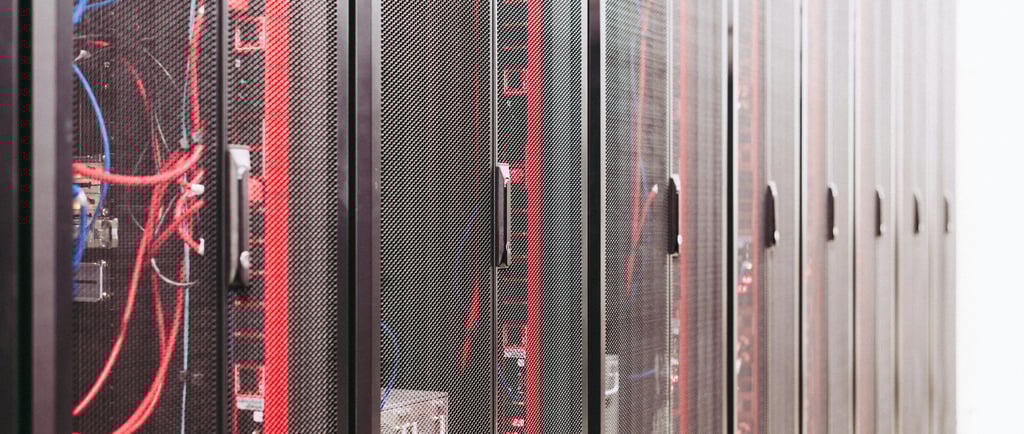
Data center systems spending is projected to surpass $650 billion in 2026, representing a robust 31.7% year-over-year increase according to Gartner. This surge is driven by hyperscaler AI buildouts totaling roughly $650–700 billion across Amazon, Microsoft, Alphabet, and Meta, focused on GPUs, servers, power infrastructure, and high-speed networking. Global IT spending overall reaches $6.15 trillion.
For mid-market operators and PE portcos, the wave creates significant downstream risk — particularly in connectivity. Legacy network circuits, peering agreements, and bandwidth contracts designed for pre-AI traffic patterns are increasingly ill-equipped for the demands of edge computing, real-time inference, and data-intensive collaboration tools. The outcome is a connectivity-specific Tech Tax characterized by burstable overages, peering fee escalations, capacity constraints, and performance bottlenecks that inflate costs while degrading user experience.
The Connectivity Choke Point and Legacy Inertia
Many mid-market organizations still rely on fixed dedicated internet access (DIA), multiprotocol label switching (MPLS), or older hybrid setups priced for 2020–2023 usage levels. As AI workloads push data closer to the edge and unified communications platforms become more bandwidth-hungry, demand spikes unpredictably. Vendors respond with contractual escalations justified by “market conditions” and “infrastructure investment recovery.”
Legacy Inertia exacerbates the issue through auto-renewal clauses, limited internal visibility into usage patterns, and resistance to renegotiation. The result is a double penalty: higher unit costs and throttled performance that slows critical operations such as real-time analytics, video collaboration, and supply-chain visibility tools. For many $200 million+ revenue firms, annual leakage in inefficient connectivity can reach $300,000 to $700,000+, representing trapped Capital Yield that could otherwise support growth or debt service.
Left unaddressed, this exposure compounds. As data center capacity constraints tighten power and cooling availability in certain regions, connectivity becomes an even scarcer and more expensive resource. Mid-market portcos risk becoming collateral damage in the supercycle rather than participants who benefit from improved flow.
Sigma’s Forensic and Arbitrage-Driven Approach
Sigma Technology Consulting delivers clarity through a targeted Digital Plumbing Audit focused on the network layer. We inventory all circuits, peering arrangements, burst provisions, quality-of-service policies, and usage telemetry. Contract terms are dissected for hidden escalators and auto-renewal triggers.
We then apply Market Tape intelligence — proprietary, real-time pricing data from over 200 global providers — to benchmark your current rates against 2026 street pricing for comparable capacity and performance. Spreads frequently range from 30–50% or more, especially on legacy MPLS or outdated peering deals.
Infrastructure Arbitrage follows: a sophisticated reset that may include carrier consolidation, renegotiation of burst and peering terms, migration to software-defined wide area networking (SD-WAN) overlays, right-sizing of bandwidth profiles, or strategic shifts to higher-capacity dark fiber alternatives where economically viable. The process prioritizes minimal disruption, ensuring business continuity while unlocking immediate cash recovery.
Our vendor-neutral, performance-based model ensures alignment — savings and EBITDA Lift drive the economics of the engagement.
Case Study: From Exposure to Optimized Flow
A PE-backed manufacturing and distribution portco recently encountered the supercycle squeeze post-tuck-in integration. Legacy circuits were priced at approximately 3.2 times current market rates, with frequent burst overages adding friction during peak AI-enabled quality control and logistics analytics periods.
The engagement delivered:
$410,000+ recovered in the first 12 months
41% overall reduction in network connectivity spend
Improved latency and reliability supporting new edge AI applications
Strong EBITDA Lift and a cleaner infrastructure story for future diligence
The portco transformed a vulnerability into a competitive advantage, positioning itself to scale with — rather than be constrained by — the data center wave.
Strategic Implications for 2026 and Beyond
Connectivity is no longer a commodity utility; it is a strategic asset in the AI era. Mid-market firms that treat it as such through proactive arbitrage will enjoy lower fixed costs, better performance, and greater flexibility to adopt emerging technologies. PE sponsors can amplify impact by applying portfolio-wide connectivity audits and resets, creating standardized savings playbooks that de-risk new acquisitions and enhance exit multiples.
The supercycle shows no signs of slowing. Power constraints, regional capacity shortages, and continued AI demand growth suggest connectivity costs will remain under pressure. Organizations that act decisively in 2026 will capture Capital Yield while laggards subsidize the buildout.
Sigma Technology Consulting (STC) specializes in Infrastructure Arbitrage to eliminate the Tech Tax for mid-market firms.
If your connectivity costs feel misaligned with 2026 realities, email info@sigmatechconsult.com to discuss a targeted network audit and arbitrage roadmap.
Sigma Technology Consulting, Inc.
25 Years of Experience, Vetting & Procuring Technology Vendors
Contact Us
Support
© 2026. All rights reserved.